

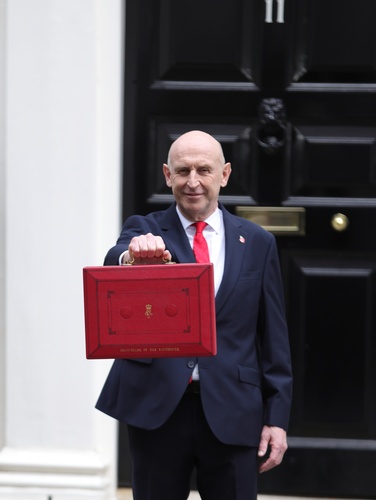
The Budget has been met with mixed reaction from business organisations, as rates relief is welcomed for independents, but the Chancellor was accused of failing to address the rising tide of costs that holds business back.
In his first Budget as Chancellor, John Healey said he was giving families and businesses breathing space from rising costs, with action on energy bills, fuel duty, wages and the everyday cost of living. It included Small Business Rates Relief extended to businesses with a rateable value of up to £18,000, up from £12,000. Businesses above that threshold will see rates increases linked to inflation, at 3.5 per cent next year, avoiding the 25 per cent increase that would have happened without intervention. The Chancellor said the change would take around 70,000 more businesses out of business rates altogether, meaning half of all shops, restaurants and gyms will pay no business rates at all. Furthermore, on April 1, 2027, the National Living Wage will increase by 3.9 per cent to £13.21 per hour. Meanwhile, tariffs will be removed from more than 100 products, helping lower import costs on products including baked beans and chocolate.
However, his Budget has been met with a mixed reaction, with suggestions that it did not go far enough.
The British Independent Retailers Association (Bira) hailed it a win for independent retailers, with CEO, Andrew Goodacre, commenting that the increase in Small Business Rates Relief and the decision to link other rates rises to inflation were measures Bira had campaigned for, and should be seen as a win for the association and its members. However, he said the lack of help on employment and energy costs was a missed opportunity.
Goodacre commented: “This Budget has not contained any of the nasty surprises from the past two years. In fact, we are pleased to see Small Business Rates Relief increased by 50 per cent, and all other rates increases next year linked to inflation. Bira raised these issues as genuine concerns on several occasions in the run-up to the Budget, and we are delighted that the Treasury has listened. This is a real win for independent retailers. We would rather not have seen any increases at all, and we will push for that next year. On the negative side, the lack of measures to reduce the cost of employment and energy is disappointing. Increasing the Employment Allowance would have been a real help to small employers, and this was a missed opportunity.”
Referring to introduction of a £90,000 threshold before VAT is charged on online sales from UK businesses, Goodacre added: “In trying to close one loophole, the government has created another one. Finally, we support measures to reduce the impact of the cost of living on the general public, and we hope this boosts consumer confidence as we enter the crucial ‘golden quarter’ for the retail sector.”
Meanwhile, Helen Dickinson, Chief Executive of the British Retail Consortium, commented: “Today’s Budget will see retail costs keep climbing as the Chancellor failed to provide the breathing space he promised. Retail faces £41 billion in business taxes this year, over 120,000 jobs have been lost in just two years, and one in seven shops lies empty. Yet employment costs continue to rise. Business rates continue to rise. The Government cannot keep talking about reviving high streets while failing to address the rising tide of costs that holds them back.”
Referring to business rates, Dickinson went on: “This was a smoke and mirrors announcement on business rates. The Chancellor’s headline announcement that he will ‘freeze [retail, hospitality and leisure] rates in real terms’ means a 3.5 per cent increase – another body blow to high streets already struggling with rising costs and empty units. It will add around £250 million to retailers’ bills next April as one in seven shops lies empty. And while we welcome the decision to remove 70,000 small high street businesses from paying business rates altogether, the overwhelming proportion of employment and rates come from the 500,000 medium and larger retail outlets whose bills will go up once again. Retail accounts for around five per cent of the economy yet pays over 20 per cent of business rates. Increasing retail’s burden means less money for investment in jobs, stores, and keeping prices down.”
And in relation to employment costs, Dickinson commented: “The Chancellor has squandered a crucial opportunity to start tackling the growing youth employment crisis. The above-inflation increase in the National Living Wage, combined with the lack of any reduction to employer National Insurance Contributions (NICs), will add further pressure on retail jobs. Retailers want to pay colleagues well, but Government cannot ignore the fact that today’s announcement adds another £2 billion on top of the £6.5 billion in additional employment costs that retailers have faced over the last two years. With over 120,000 jobs already lost since 2024, the country cannot afford to wait until the 2027 Budget and the outcomes of the Milburn review for action. The Chancellor needs to make it easier, not harder, to give young people a start. Today, he failed to do that.”
Also commenting was Michelle Ovens CBE, CEO and Founder of Small Business Britain, who said: “It is encouraging to see the Chancellor recognise the huge contribution our 5.7 million small businesses make to the UK economy, and the importance of backing entrepreneurs across the country. The increased trading allowance is particularly welcome. With more people starting businesses as side hustles, we need to make it easier for those ambitions to become thriving businesses. Support for female entrepreneurs through the British Business Bank is also an important step towards unlocking the enormous potential of women in business. Changes to business rates will of course bring welcome relief to the small businesses that are the beating heart of our high streets and communities, which must now be built on with the High Street Strategy. Today is a positive step forward, and we must keep working to ensure everyone, whatever their background, has the opportunity to start and grow a business.”